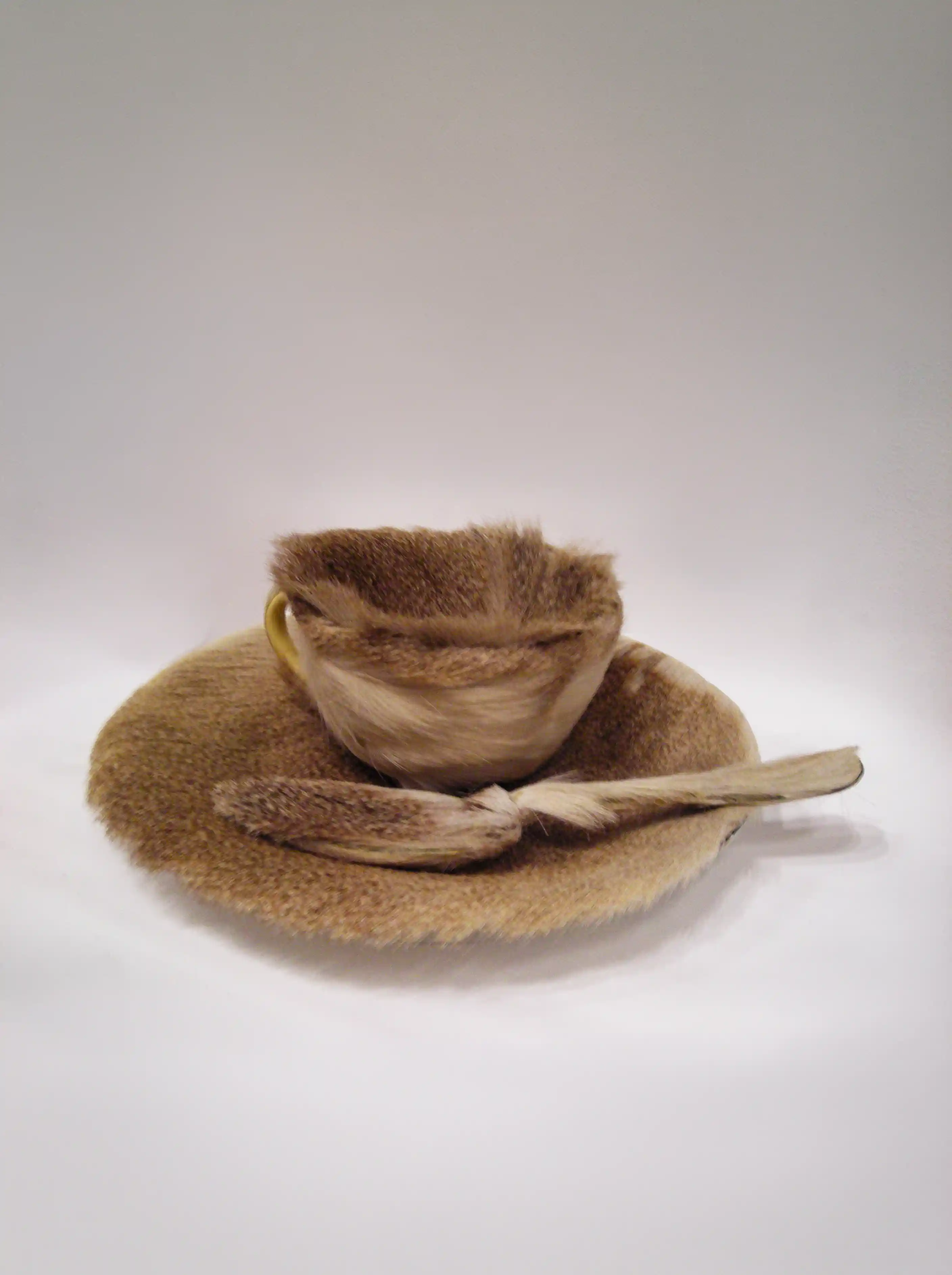
Nobody's being silly anymore
Nobody's being silly anymore
Nobody's being silly anymore
In college, I had friends who wore chokers in public. We held ukuleles and sang Britney songs into a lens. Off key, of course. Some of my friends even wore man buns and started bands. Their music was terrible but we still went to see them live. And we mostly had a pretty good time. They knew they were terrible and still didn't need to work up the courage to go public. They just played.
I guess my point is, somehow, it was that same ridiculous era, with its chokers, ukuleles, and man buns, that also built most of what we take seriously today. And I don't see any of those people being silly in that capacity anymore. Certainly not in public.
You can tell me it comes with age, but I refuse to believe it. When I spend time with these people in private, I still catch a glimpse of that spark. They're still full of outlandish ideas, the occasional dad joke, still want to build things, make mistakes, and learn. But they only show that side with the very few they trust. It's almost like they're wearing a mask.
SILLY IS A FEAR
Before this gets spicy, let me clarify what I mean by silly. I mean unthought-out. Spur of the moment. Honest and direct opinions. Not filtered.
We even have an expression for it: not having a filter. It typically has a negative connotation. But ironically, it also forms the basis of one of the most engaging content formats on social media. One of my degrees is in new media, and most of that major revolves around the dynamics of online engagement. Unfiltered opinions packaged in a comedic tone is one of them. And people are drawn to it, especially now, after years of AI-generated slop clogging everything.
This matters more if you're building something. The window for sounding like yourself is opening back up, and most people are still too scared to walk through it.
A few examples.
Liquid Death. If you have a teenage son, you've probably heard of them. It's essentially water in a can, packaged with a young, dry, direct personality. I don't particularly like it, and I wouldn't use it, but I can see what it's going for. And I can see the magic it's working on its audience. It cloaks a healthy habit under a nonchalant personality.
Then there are Stanleys. Girls and gays hydrating with a product that was traditionally associated with construction workers, repackaged as a colorful symbol of healthy self-care. The Stanley cup says: I'm a good person taking care of themselves, and I have a personality.
Boys, on the other hand, have plastic bottles that make them look like they have zero cares about the environment and a basic personality. Anyone holding a Liquid Death at a concert won't get asked why they're not drinking alcohol. The product is being silly for them. They're not risking being cancelled online because they attempted a joke.
Whether any of this is objectively true is beside the point. What matters is the perception and the cultural dynamic these products are addressing. Liquid Death exists because people need to be silly in a safe way. Because the way today's forty-year-olds were silly back in the day is no longer considered safe. It moves fast now. You can offend someone in a finger snap.
I'll give you an example.
A few months back I was at a mixer in Brooklyn. Supposed to be an evening bringing together emerging pioneers of the creative industries, whatever that means. Looking back, the word pioneer should have been a red flag, but I was eager to meet new people.
I arrived fashionably late, as you do in New York. There was an open bar. I grabbed a drink and approached a circle of young pioneers. It was all US Open this, fashion week that, until someone said: I can't really place your accent, which I get quite often here as a non-native speaker.
I told them I'd moved from Amsterdam.
People typically talk about the canals, the weed, and so on. At times I also meet someone who asks an honest question about Amsterdam. This was one of those nights.
One of the women asked if I missed anything in particular. Something that could only happen there, or something along those lines. She probably expected a restaurant recommendation. A local spot. Maybe a windmill.
But my silly international brain registered it as genuine interest, so I told them about my dog's groomer.
In my eight years in Amsterdam, my dog Mochi got groomed right in the middle of the red light district. Every month I'd carry him in a basket attached to my bike, park nearby, and walk across the street past the glass windows where sex workers waited. Tourists would photograph us constantly, even though photographing the workers is illegal there. I was so desensitized I didn't notice anymore. Mochi and I had actually made friends with a few of the workers, who'd wave at him when we passed.
Anyway. These people hadn't been to Amsterdam at all, so my funny story went right over their heads, and I ended up being the guy who brought up hookers at a fancy members-only social club. To save face I said a few things revealing I was gay, but that went out the window too because I'm not great at that lingo either. Long story short, I was cast away as a weirdo and that was that.
SILLY IS AN EXPERIMENT
A few months later I was reading Where Good Ideas Come From by Steven Johnson. Somewhere in it, he talks about Google's 20% time rule: an initiative that let engineers spend one day a week on personal passion projects unrelated to their main job. That initiative led to Gmail, Google News, Google Maps, and AdSense. Maps. Insane. They shelved it around 2014, roughly when the man buns peaked. Intriguing.
What I'm feeling, I think, is nostalgia for a time when we weren't as self-limiting.
Why do you think there's a hobby craze right now? Younger people picking up backgammon, tufting, tarot. My theory is they want to do something without having to think about how good they can be at it, or where it might lead. Experimenting lets you simply be. There's something about doing something badly on purpose that gets you out of your own head.
How else do you explain Mariah Carey's grunge album? Or Keanu Reeves' band?
Without the silly first, the serious doesn't exist.
I've been an outsider in five countries. The one thing that's worked everywhere is saying what you actually think. People sense these things. If your ignorance comes from genuine curiosity, they won't care about the etiquette. Most will welcome it.
I think we've had enough of experiencing life through fabricated versions of reality. That era is passing. And what comes next is something no algorithm can copy.
And I am hopeful about what it can change.
More on it later.
Gator. 🗿
In college, I had friends who wore chokers in public. We held ukuleles and sang Britney songs into a lens. Off key, of course. Some of my friends even wore man buns and started bands. Their music was terrible but we still went to see them live. And we mostly had a pretty good time. They knew they were terrible and still didn't need to work up the courage to go public. They just played.
I guess my point is, somehow, it was that same ridiculous era, with its chokers, ukuleles, and man buns, that also built most of what we take seriously today. And I don't see any of those people being silly in that capacity anymore. Certainly not in public.
You can tell me it comes with age, but I refuse to believe it. When I spend time with these people in private, I still catch a glimpse of that spark. They're still full of outlandish ideas, the occasional dad joke, still want to build things, make mistakes, and learn. But they only show that side with the very few they trust. It's almost like they're wearing a mask.
SILLY IS A FEAR
Before this gets spicy, let me clarify what I mean by silly. I mean unthought-out. Spur of the moment. Honest and direct opinions. Not filtered.
We even have an expression for it: not having a filter. It typically has a negative connotation. But ironically, it also forms the basis of one of the most engaging content formats on social media. One of my degrees is in new media, and most of that major revolves around the dynamics of online engagement. Unfiltered opinions packaged in a comedic tone is one of them. And people are drawn to it, especially now, after years of AI-generated slop clogging everything.
This matters more if you're building something. The window for sounding like yourself is opening back up, and most people are still too scared to walk through it.
A few examples.
Liquid Death. If you have a teenage son, you've probably heard of them. It's essentially water in a can, packaged with a young, dry, direct personality. I don't particularly like it, and I wouldn't use it, but I can see what it's going for. And I can see the magic it's working on its audience. It cloaks a healthy habit under a nonchalant personality.
Then there are Stanleys. Girls and gays hydrating with a product that was traditionally associated with construction workers, repackaged as a colorful symbol of healthy self-care. The Stanley cup says: I'm a good person taking care of themselves, and I have a personality.
Boys, on the other hand, have plastic bottles that make them look like they have zero cares about the environment and a basic personality. Anyone holding a Liquid Death at a concert won't get asked why they're not drinking alcohol. The product is being silly for them. They're not risking being cancelled online because they attempted a joke.
Whether any of this is objectively true is beside the point. What matters is the perception and the cultural dynamic these products are addressing. Liquid Death exists because people need to be silly in a safe way. Because the way today's forty-year-olds were silly back in the day is no longer considered safe. It moves fast now. You can offend someone in a finger snap.
I'll give you an example.
A few months back I was at a mixer in Brooklyn. Supposed to be an evening bringing together emerging pioneers of the creative industries, whatever that means. Looking back, the word pioneer should have been a red flag, but I was eager to meet new people.
I arrived fashionably late, as you do in New York. There was an open bar. I grabbed a drink and approached a circle of young pioneers. It was all US Open this, fashion week that, until someone said: I can't really place your accent, which I get quite often here as a non-native speaker.
I told them I'd moved from Amsterdam.
People typically talk about the canals, the weed, and so on. At times I also meet someone who asks an honest question about Amsterdam. This was one of those nights.
One of the women asked if I missed anything in particular. Something that could only happen there, or something along those lines. She probably expected a restaurant recommendation. A local spot. Maybe a windmill.
But my silly international brain registered it as genuine interest, so I told them about my dog's groomer.
In my eight years in Amsterdam, my dog Mochi got groomed right in the middle of the red light district. Every month I'd carry him in a basket attached to my bike, park nearby, and walk across the street past the glass windows where sex workers waited. Tourists would photograph us constantly, even though photographing the workers is illegal there. I was so desensitized I didn't notice anymore. Mochi and I had actually made friends with a few of the workers, who'd wave at him when we passed.
Anyway. These people hadn't been to Amsterdam at all, so my funny story went right over their heads, and I ended up being the guy who brought up hookers at a fancy members-only social club. To save face I said a few things revealing I was gay, but that went out the window too because I'm not great at that lingo either. Long story short, I was cast away as a weirdo and that was that.
SILLY IS AN EXPERIMENT
A few months later I was reading Where Good Ideas Come From by Steven Johnson. Somewhere in it, he talks about Google's 20% time rule: an initiative that let engineers spend one day a week on personal passion projects unrelated to their main job. That initiative led to Gmail, Google News, Google Maps, and AdSense. Maps. Insane. They shelved it around 2014, roughly when the man buns peaked. Intriguing.
What I'm feeling, I think, is nostalgia for a time when we weren't as self-limiting.
Why do you think there's a hobby craze right now? Younger people picking up backgammon, tufting, tarot. My theory is they want to do something without having to think about how good they can be at it, or where it might lead. Experimenting lets you simply be. There's something about doing something badly on purpose that gets you out of your own head.
How else do you explain Mariah Carey's grunge album? Or Keanu Reeves' band?
Without the silly first, the serious doesn't exist.
I've been an outsider in five countries. The one thing that's worked everywhere is saying what you actually think. People sense these things. If your ignorance comes from genuine curiosity, they won't care about the etiquette. Most will welcome it.
I think we've had enough of experiencing life through fabricated versions of reality. That era is passing. And what comes next is something no algorithm can copy.
And I am hopeful about what it can change.
More on it later.
Gator. 🗿
Oli Uygun