
The hitchhiker's guide to New York City
The hitchhiker's guide to New York City
The hitchhiker's guide to New York City
New York.
New York is not a blank canvas. If you moved here, you already had an idea of what it would be like to live here. Everybody has a New York hero. For some it's Patti Smith, for others it's Keith Haring. Lou Reed, Andy Warhol, Michael Bloomberg. I can count forever. Practically anyone except Anna Wintour, because I don't think anyone in their right mind would want to become that.
Depending on your New York hero, your idea of a New York life might change. Carrie Bradshaw's New York and Lou Reed's New York are two very different things. One exists, and the other doesn't to begin with.
But one thing that doesn't change is that living in New York is like going through high school all over again. Except this time the cafeteria costs forty dollars a plate, and this place becomes your whole personality until the day you graduate, which roughly translates to moving to the suburbs to procreate.
There's this movie, Mean Girls, where Lindsay Lohan plays Cady, a seventeen year old transferring to a suburban high school after spending most of her childhood in Africa. In one scene, two new friends pull her aside in the cafeteria and brief her on the entire school. They hand her a map and tell her who to avoid and where to sit to survive. This is where the jocks sit. Here's the art freaks table. And so forth.
Living in this city is a little like that. Neighborhoods have brands, and where you choose to live tells people a lot about you before you even open your mouth. If you get to choose, that is. The analogy doesn't stop there. If you moved to New York from somewhere like Amsterdam, or if you've spent most of your life living across various parts of the world like I did, you're practically Cady herself. Everything in this city is brand new to you. You're moving around town like an alien trying to figure out why things are the way they are.
Unlike in the movie, there's no friendly face willing to brief you. So you figure it out yourself. And if you're building something here, which many of us are, you want a map.
I haven't been here long enough to claim authority, but I've lived abroad most of my life, so I'd like to believe I know my way around decoding the social dynamics of a foreign place. Which is why I'm taking on the challenge of creating my own map: a map of the kinds of people you'll meet in New York.
Consider this your cafeteria tour.
Before you roast me, a word of warning: take all of this with a grain of salt. I personally know people in every single one of these neighborhoods who'd make this whole map look stupid. So tread lightly.
THE VOCAL FRIER
We're starting in the West Village. This is where the conventionally pretty people live.
Most of them speak in a lower register, otherwise known as the vocal fry. Think Kardashians. That creaky, slow, raspy sound where the vocal cords seem vaguely inconvenienced by having to form words.
This part of town has independent theaters that have been around for over a hundred years. Most West Villagers won't know about them.
They love their matcha though. So you'll be able to get anything with matcha here. That's a genuine silver lining.
Things are expensive, so watch out. People tend to communicate in loud, long rants about a third person. Humble bragging is prevalent. And people here are very close to their parents, if you know what I mean.
Rent. (coughs)
THE INTERNATIONAL MERCHANT
Moving on to Tribeca, famously home to the international merchant. I'm particularly excited about this one because this is where I spend most of my time.
Here's the thing about Tribeca: if you've lived in the city for a few months, you think it's where people come after they've made it. If you've lived here a few years, you notice it's also home to those who haven't necessarily made it but need you to think they have. This pattern applies to a few other neighborhoods too, but let's stay focused.
The first Tribeca type is quiet, deliberately understated. Lovely to sit next to in a cafe. You won't even notice they're there unless you're a social climber, which we'll get to in a moment. These people are not of particular interest to us. They're the same everywhere in the world.
The second type is where it gets fun. These people speak English as a second or third language. They're typically here because they have cultural ties that make them relevant to a business, a person, or an entire industry in the city. Say there's a product taking off in China and New York businesses want in. They work with a local who speaks Mandarin and knows the scene in Beijing. In taste-driven industries, hospitality and fashion, Italian and French get spoken in a professional capacity constantly. Something I personally witness almost every week while eavesdropping on meetings in cafes.
This type dresses impeccably and notices those who do the same.
One subcategory worth mentioning before we move on: the exotics. Some European stereotypes don't really translate here. The British accent, for instance, carries a completely different set of assumptions in New York than it does back in Europe. Many taste-driven businesses I've observed here have staff who speak with a British accent, seemingly to project a cultured impression. I'm sure there are other accents and cultural signals that locals romanticize in ways that don't translate either way.
Overall, international merchants are ambitious. They can usually tell the difference between good food and overpriced food. They won't be ripped off under any circumstances. They smell pretty good. And they always know the right people, which is always a plus.
THE TRANSPLANT
Every city has transplants. From the way people behave on the trains, I theorize New York is actually mostly transplants.
After a while you can tell who's been here long enough to relax and who's still performing the version of themselves they moved here to become.
I'm a transplant, five times over actually, so my judgment here is probably way off. But in the name of transparency, here goes nothing.
A few patterns I've observed. Transplants are passionate about names. They drop restaurants a lot. Vacation destinations are another favorite. Curiously, their experiences are always positive. I have yet to hear a negative comment about a place a transplant has been to.
When out and about, they'll stick to topics that won't get them in trouble. Expect plenty of rants on bosses, situationships, and pets. And they will avoid the subway whenever possible. No judgment, but I witness this a lot.
THE ARTIST
There's a very specific person who lives in this city who has enough money to not work, enough taste to be around art, and enough anxiety about both to end up in Bushwick every other weekend.
That person is the aspiring artist.
In two years here, I've seen people who claimed to be artists and seemed to be producing work, while somehow maintaining a great life despite complaining about how hard they had it financially. I could have named this archetype differently, but some of these people do care about art. It's not their fault they were born into money. Some of them are decent at what they do too.
Then there's the starving artist. Also young, also in the arts, but unlike the aspiring artist, these people have been gentrified out of most of Manhattan. They're somewhere east of the L train, silently working on pieces the aspiring artist will be talking about in three years.
They're usually the most interesting people in any room they walk into. The problem is they often don't have the means to be in the room. Or they're too busy being broke and brilliant to notice everyone else is quietly watching them for cues.
This is the only archetype the whole city actually runs on. These are the people who continuously feed the massive culture industry here. You can track most trends back to a Bushwick hang where the aspiring artist took the latest idea of the starving artist home, showing it off for validation and street credit among peers. The transplants come because of them. So do the international merchants. The vocal friers claim to like them when they see their work on social media.
THE CAFETERIA
As I said at the start, this city is not easy.
All these people, the vocal frier, the international merchant, the transplant, the artist, they come to New York in pursuit of a dream. Usually a version of themselves. And they play that version to survive the hardship of the city.
It does the job. Like plastic.
But surviving and thriving are different things.
The people who actually thrive here figured out one thing: voice is currency. An actual point of view. It's one of those things you either have or you don't. And if you don't, no amount of following the right people will give you one. Real New Yorkers smell it immediately.
This is the only city in America where being genuinely weird, genuinely stubborn, genuinely yourself is a competitive advantage. That's why America needs New York to stay ahead. This is where people come to say the thing everyone is thinking and nobody else is willing to say out loud. The city makes space for that. It's actually the only one that does.
The Plastics may survive high school. But I think it's the Cadys who've got what it takes to change the world.
And I think that's pretty grool. 🦚
New York.
New York is not a blank canvas. If you moved here, you already had an idea of what it would be like to live here. Everybody has a New York hero. For some it's Patti Smith, for others it's Keith Haring. Lou Reed, Andy Warhol, Michael Bloomberg. I can count forever. Practically anyone except Anna Wintour, because I don't think anyone in their right mind would want to become that.
Depending on your New York hero, your idea of a New York life might change. Carrie Bradshaw's New York and Lou Reed's New York are two very different things. One exists, and the other doesn't to begin with.
But one thing that doesn't change is that living in New York is like going through high school all over again. Except this time the cafeteria costs forty dollars a plate, and this place becomes your whole personality until the day you graduate, which roughly translates to moving to the suburbs to procreate.
There's this movie, Mean Girls, where Lindsay Lohan plays Cady, a seventeen year old transferring to a suburban high school after spending most of her childhood in Africa. In one scene, two new friends pull her aside in the cafeteria and brief her on the entire school. They hand her a map and tell her who to avoid and where to sit to survive. This is where the jocks sit. Here's the art freaks table. And so forth.
Living in this city is a little like that. Neighborhoods have brands, and where you choose to live tells people a lot about you before you even open your mouth. If you get to choose, that is. The analogy doesn't stop there. If you moved to New York from somewhere like Amsterdam, or if you've spent most of your life living across various parts of the world like I did, you're practically Cady herself. Everything in this city is brand new to you. You're moving around town like an alien trying to figure out why things are the way they are.
Unlike in the movie, there's no friendly face willing to brief you. So you figure it out yourself. And if you're building something here, which many of us are, you want a map.
I haven't been here long enough to claim authority, but I've lived abroad most of my life, so I'd like to believe I know my way around decoding the social dynamics of a foreign place. Which is why I'm taking on the challenge of creating my own map: a map of the kinds of people you'll meet in New York.
Consider this your cafeteria tour.
Before you roast me, a word of warning: take all of this with a grain of salt. I personally know people in every single one of these neighborhoods who'd make this whole map look stupid. So tread lightly.
THE VOCAL FRIER
We're starting in the West Village. This is where the conventionally pretty people live.
Most of them speak in a lower register, otherwise known as the vocal fry. Think Kardashians. That creaky, slow, raspy sound where the vocal cords seem vaguely inconvenienced by having to form words.
This part of town has independent theaters that have been around for over a hundred years. Most West Villagers won't know about them.
They love their matcha though. So you'll be able to get anything with matcha here. That's a genuine silver lining.
Things are expensive, so watch out. People tend to communicate in loud, long rants about a third person. Humble bragging is prevalent. And people here are very close to their parents, if you know what I mean.
Rent. (coughs)
THE INTERNATIONAL MERCHANT
Moving on to Tribeca, famously home to the international merchant. I'm particularly excited about this one because this is where I spend most of my time.
Here's the thing about Tribeca: if you've lived in the city for a few months, you think it's where people come after they've made it. If you've lived here a few years, you notice it's also home to those who haven't necessarily made it but need you to think they have. This pattern applies to a few other neighborhoods too, but let's stay focused.
The first Tribeca type is quiet, deliberately understated. Lovely to sit next to in a cafe. You won't even notice they're there unless you're a social climber, which we'll get to in a moment. These people are not of particular interest to us. They're the same everywhere in the world.
The second type is where it gets fun. These people speak English as a second or third language. They're typically here because they have cultural ties that make them relevant to a business, a person, or an entire industry in the city. Say there's a product taking off in China and New York businesses want in. They work with a local who speaks Mandarin and knows the scene in Beijing. In taste-driven industries, hospitality and fashion, Italian and French get spoken in a professional capacity constantly. Something I personally witness almost every week while eavesdropping on meetings in cafes.
This type dresses impeccably and notices those who do the same.
One subcategory worth mentioning before we move on: the exotics. Some European stereotypes don't really translate here. The British accent, for instance, carries a completely different set of assumptions in New York than it does back in Europe. Many taste-driven businesses I've observed here have staff who speak with a British accent, seemingly to project a cultured impression. I'm sure there are other accents and cultural signals that locals romanticize in ways that don't translate either way.
Overall, international merchants are ambitious. They can usually tell the difference between good food and overpriced food. They won't be ripped off under any circumstances. They smell pretty good. And they always know the right people, which is always a plus.
THE TRANSPLANT
Every city has transplants. From the way people behave on the trains, I theorize New York is actually mostly transplants.
After a while you can tell who's been here long enough to relax and who's still performing the version of themselves they moved here to become.
I'm a transplant, five times over actually, so my judgment here is probably way off. But in the name of transparency, here goes nothing.
A few patterns I've observed. Transplants are passionate about names. They drop restaurants a lot. Vacation destinations are another favorite. Curiously, their experiences are always positive. I have yet to hear a negative comment about a place a transplant has been to.
When out and about, they'll stick to topics that won't get them in trouble. Expect plenty of rants on bosses, situationships, and pets. And they will avoid the subway whenever possible. No judgment, but I witness this a lot.
THE ARTIST
There's a very specific person who lives in this city who has enough money to not work, enough taste to be around art, and enough anxiety about both to end up in Bushwick every other weekend.
That person is the aspiring artist.
In two years here, I've seen people who claimed to be artists and seemed to be producing work, while somehow maintaining a great life despite complaining about how hard they had it financially. I could have named this archetype differently, but some of these people do care about art. It's not their fault they were born into money. Some of them are decent at what they do too.
Then there's the starving artist. Also young, also in the arts, but unlike the aspiring artist, these people have been gentrified out of most of Manhattan. They're somewhere east of the L train, silently working on pieces the aspiring artist will be talking about in three years.
They're usually the most interesting people in any room they walk into. The problem is they often don't have the means to be in the room. Or they're too busy being broke and brilliant to notice everyone else is quietly watching them for cues.
This is the only archetype the whole city actually runs on. These are the people who continuously feed the massive culture industry here. You can track most trends back to a Bushwick hang where the aspiring artist took the latest idea of the starving artist home, showing it off for validation and street credit among peers. The transplants come because of them. So do the international merchants. The vocal friers claim to like them when they see their work on social media.
THE CAFETERIA
As I said at the start, this city is not easy.
All these people, the vocal frier, the international merchant, the transplant, the artist, they come to New York in pursuit of a dream. Usually a version of themselves. And they play that version to survive the hardship of the city.
It does the job. Like plastic.
But surviving and thriving are different things.
The people who actually thrive here figured out one thing: voice is currency. An actual point of view. It's one of those things you either have or you don't. And if you don't, no amount of following the right people will give you one. Real New Yorkers smell it immediately.
This is the only city in America where being genuinely weird, genuinely stubborn, genuinely yourself is a competitive advantage. That's why America needs New York to stay ahead. This is where people come to say the thing everyone is thinking and nobody else is willing to say out loud. The city makes space for that. It's actually the only one that does.
The Plastics may survive high school. But I think it's the Cadys who've got what it takes to change the world.
And I think that's pretty grool. 🦚
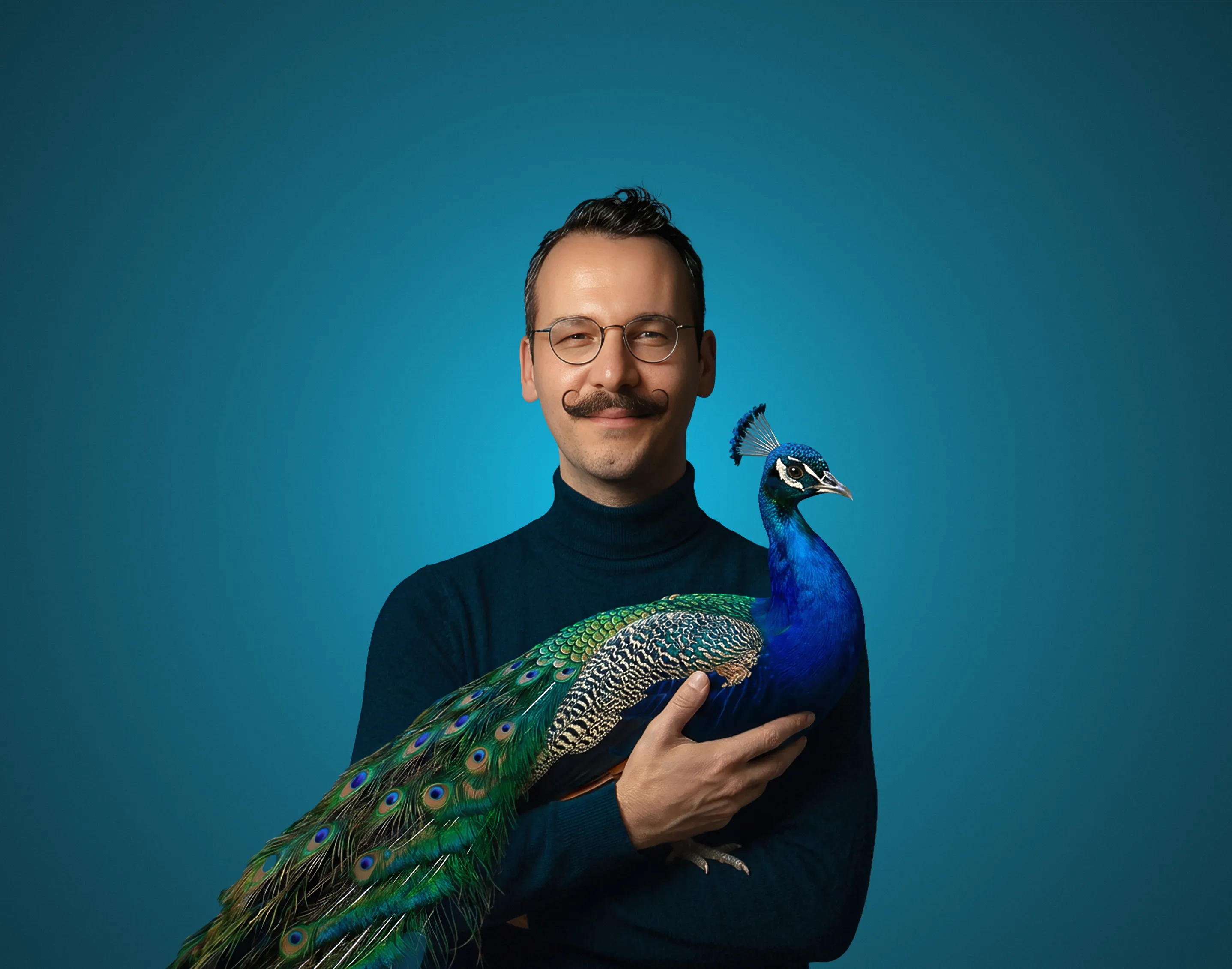
Oli Uygun